Chemistry Questions

What is the Valency of Nitrogen Atom in NH₃

What is the Valency of Nitrogen Atom in NH₃ ?

Answer: The Valency of Nitrogen Atom in NH₃ is 3 Nitrogen is a non-metal chemical element with the symbol N and atomic number 7. It constitutes about 78% of Earth’s atmosphere and is an essential element for life. Electronic Configuration of Nitrogen The electronic configuration of nitrogen is: Nitrogen has 5 valence electrons in its

What is the Valency of Nitrogen Atom in NH₃ ? Read More »

How Many Electrons Are There in One-Coulomb Charge?

How many Electrons are there in One-Coulomb Charge?

There are 6.25 × 10¹⁸ electrons in One-Coulomb Charge. Calculation and Explanation: The charge on a single electron is 1.602 × 10⁻¹⁹ C. How to calculate the number of electrons in 1 C of charge? Key Points Practical Implications Understanding the relationship between charge and the number of electrons is crucial for electrical circuit analysis,

How many Electrons are there in One-Coulomb Charge? Read More »

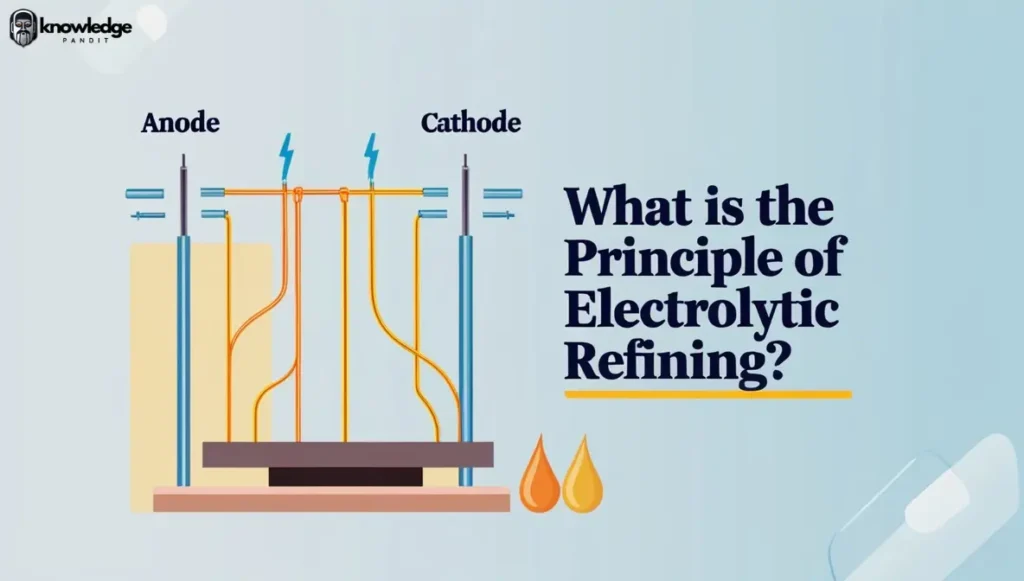
What is the Principle of Electrolytic Refining?

What is the Principle of Electrolytic Refining?

Electrolytic refining is a widely used process for purifying metals. The principle involves the use of electricity to separate pure metal from its impure form. Principle of Electrolytic Refining The method operates on the principle that when an electric current flows through an electrolyte, metal ions migrate from the anode to the cathode, resulting in

What is the Principle of Electrolytic Refining? Read More »

What is the Chemical Formula of Epsom Salt?

What is the Chemical Formula of Epsom Salt?

The chemical formula of Epsom Salt is MgSO4.7H2O. Epsom salt is a widely used chemical compound known for its applications in medicine, agriculture, and daily life. Its chemical composition provides essential insights into its properties and functionality. Chemical Formula of Epsom Salt Epsom salt is chemically known as Magnesium Sulfate, and its molecular formula is:

What is the Chemical Formula of Epsom Salt? Read More »